Haute Couture Design Process: From First Sketch to Finished Gown
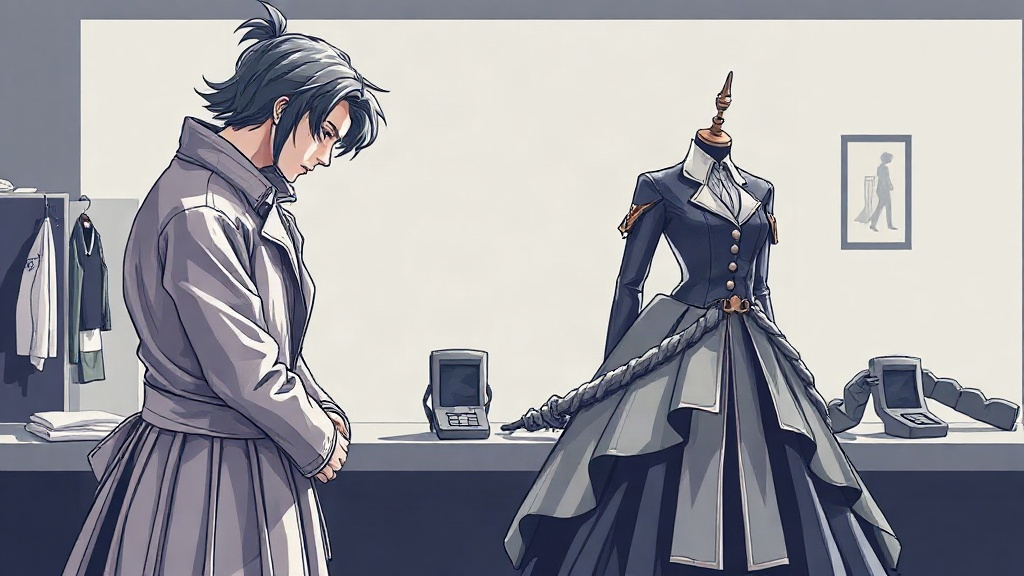
Haute couture is often described as fashion's laboratory, a place where time, craft, and imagination are given more room than anywhere else in the industry. Yet the process behind a couture garment is surprisingly structured. Understanding how an idea travels from a sketch to a finished gown reveals why couture still commands such fascination, and why even the most technology-minded designers are paying attention to it.
From Inspiration to Sketch
Every couture collection begins with a concept. It might be an architectural form, a piece of art, a historical silhouette, or a social idea the designer wants to explore. Mood boards, fabric swatches, and rough drawings help the creative team translate that abstract thought into something tangible.
Sketching is where the vision first becomes specific. Designers refine proportions, necklines, volumes, and movement, often producing far more drawings than will ever reach the runway. Editing is part of the craft, and the strongest collections are usually the most disciplined ones.
Fabric Selection and Material Research
Couture is as much about materials as it is about shape. Designers work closely with mills, embroiderers, feather specialists, and lace makers to source or even develop textiles that don't exist on the open market. Trade events such as Première Vision continue to play a major role here, giving designers a place to discover fabrics and exchange ideas.
Recently, Première Vision's denim edition showed how open the creative process has become, with the brand BOTTER sharing how it approaches reworking and recasting material. That transparency reflects a broader shift: audiences increasingly want to see how a garment is conceived, not just how it looks on a model.
The Toile and the Atelier
Once a sketch is approved, it moves into the atelier. Pattern makers translate the drawing into a flat pattern, and the first physical version is made in a plain cotton fabric called a toile. This prototype is fitted on a mannequin or a client, then cut, pinned, and reworked until the balance is right.
This stage is where couture earns its reputation. Seams are adjusted by millimeters, and a single sleeve may be rebuilt several times. Specialist teams then take over: *flou* ateliers handle soft, draped work, while *tailleur* ateliers focus on structured tailoring. Embroidery, beading, and finishing are often done entirely by hand, sometimes requiring hundreds of hours for one piece.
Fittings and Final Finishing
Made-to-measure is the heart of couture. Clients attend multiple fittings so the garment follows their body precisely, from posture to the way they move. Hems, linings, and internal structures are refined with the same care as the outer surface, which is why a couture piece feels as good as it looks.
Where Technology Enters the Conversation
Automation and digital tools are changing how many designers work, and couture is not immune to the discussion. Retail industry coverage has asked whether automation could reshape the design process, particularly in speeding up repetitive tasks such as pattern adjustments, trend analysis, and prototyping.
Research is moving quickly as well. Work such as HieraFashDiff, a hierarchical approach that uses multi-stage diffusion models, mirrors the way designers actually think: starting from a broad concept and gradually refining it into detailed garment elements. For couture houses, tools like this are less likely to replace the atelier than to support early exploration, letting designers test silhouettes, color stories, and variations before committing expensive fabric to the table.
The human skills at the core of couture remain difficult to replicate. Judging how cloth falls, how a body moves, or how a client wants to feel in a dress depends on touch and experience. Technology can accelerate ideation, but it can't pin a hem on a living person.
Why the Process Still Matters
Couture endures because its process is inseparable from its value. Slow, collaborative, and deeply personal, it offers an alternative to the speed of the broader fashion cycle. As sustainability, transparency, and craftsmanship become bigger priorities for consumers, couture's methods feel less like a relic and more like a model.
For anyone interested in fashion, studying the couture design process offers a useful lesson: great design is rarely a single flash of inspiration. It is a sequence of careful decisions, made by skilled hands, from the first sketch to the last stitch.