How Haute Couture Is Made: Inside the Couture Design Process From Sketch to Runway
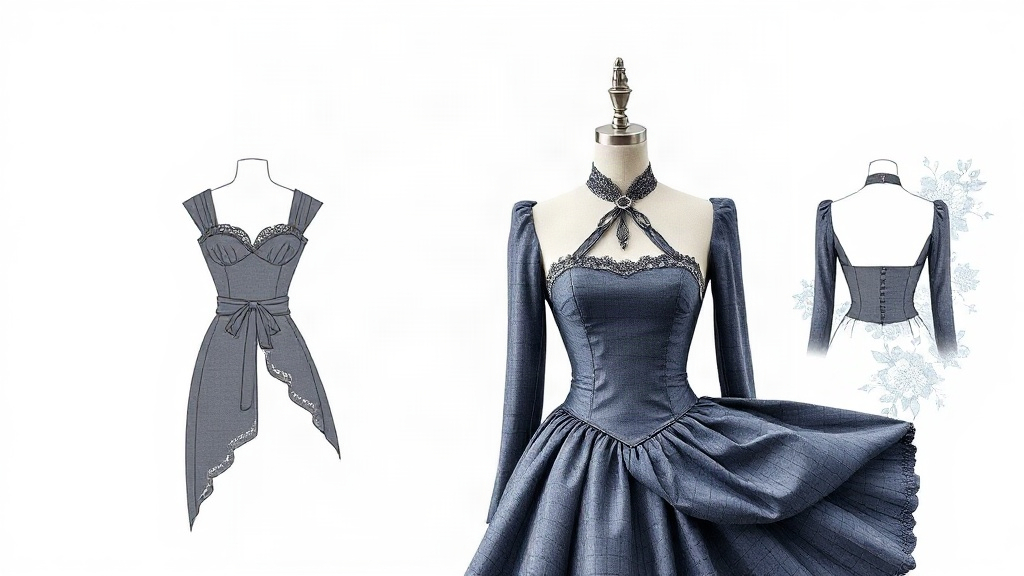
Haute couture has a reputation for mystery. Gowns appear on runways in Paris, photographers capture every beaded detail, and the public rarely sees the months of labor behind them. Yet the couture design process is one of the most structured, collaborative, and human-centered creative systems in fashion. Understanding how it works explains why a single garment can carry a price tag that rivals a luxury car.
It Starts With an Idea, Not a Pattern
Every couture collection begins with a concept. A creative director might draw from architecture, art history, nature, or even engineering. Designers working outside the major Paris houses do the same. Celeste Malvar-Stewart, for example, has drawn on aviation as a source of inspiration, translating the lines, structure, and precision of flight into wearable silhouettes. That kind of cross-disciplinary thinking is typical of couture: the inspiration is rarely about clothing at all.
From there, the designer builds mood boards, gathers fabric swatches, and produces sketches. These drawings are not final instructions. They are a starting conversation with the atelier.
The Atelier: Where Sketches Become Structure
The heart of couture is the atelier, or workshop. Traditionally, ateliers are divided into two main departments:
- Flou: the discipline of soft, draped, fluid garments such as gowns and dresses. - Tailleur: the discipline of structured pieces such as jackets, suits, and coats.
A head of the atelier, known as the *première*, interprets the sketch and leads a team of skilled artisans. She decides how the design can be engineered, which techniques will serve it best, and how many hours it will take.
Toile, Fitting, and Refinement
Before any precious fabric is cut, the team creates a toile, a prototype sewn in inexpensive cotton muslin. The toile tests proportion, movement, and balance. It is pinned, marked, taken apart, and reassembled until the design behaves exactly as intended.
When the toile is approved, the pattern is transferred to the final fabric. Couture clients, or house models for runway pieces, then attend multiple fittings. The garment is adjusted to the individual body, not to a standard size chart. This is a defining feature of true couture: it is made for one person.
Handwork at Extraordinary Scale
Much of the value in couture comes from handwork. Seams are often finished by hand, hems are weighted with precision, and internal structures such as corsetry, boning, and layered tulle are built to support the silhouette invisibly.
Specialist workshops contribute as well. Embroiderers, feather workers, pleaters, and milliners often work alongside the main atelier. A single embellished gown may involve hundreds of hours of beading or thousands of hand-placed sequins.
What Makes Couture "Couture"
The term *haute couture* is legally protected in France and governed by the Fédération de la Haute Couture et de la Mode. Houses must meet specific criteria, including:
1. Designing made-to-order pieces for private clients. 2. Maintaining an atelier in Paris with a minimum number of full-time technical staff. 3. Presenting collections of a required size to the public twice a year.
These standards preserve both craftsmanship and the integrity of the title.
Couture in a Changing Industry
Today, the couture design process is adapting without abandoning tradition. Digital tools now assist with sketching, fabric simulation, and 3D draping, while sustainability has become a major conversation. Because couture is made to order in small quantities, many argue it is inherently less wasteful than mass production. Designers are also exploring deadstock materials, archival fabrics, and responsible sourcing.
Independent designers around the world apply the same principles on a smaller scale: concept, sketch, toile, fitting, and meticulous finishing. The approach remains the same whether the studio is in Paris or the American Midwest.
Why the Process Still Matters
Couture endures because it treats clothing as both art and craft. The process rewards patience, collaboration, and technical mastery, qualities that feel increasingly rare in a fast-moving fashion landscape. For anyone who loves design, studying the couture process offers a lasting lesson: great work is rarely rushed, and the most breathtaking results are built stitch by stitch.